Showing posts with label Bladder Cancer treatment in India. Show all posts

Wednesday, 29 October 2014

Advanced Treatment (non-invasive) for Bladder Cancer - Best Cancer Hospital in India

INITIAL BLADDER CANCER TREATMENT

The most common first treatment of non-muscle invasive bladder cancer is surgery to remove any abnormal appearing areas inside the bladder; this is called transurethral resection of bladder tumor (TURBT).
Transurethral resection of bladder tumor (TURBT) — Transurethral resection of bladder tumor (TURBT) is a procedure in which a physician uses a cystoscope to see inside the bladder and remove any abnormal-appearing areas. A cystoscope is a long thin tube that contains a light and a camera.
In most cases, this procedure is done in an operating room while the person is under anesthesia. After the procedure, you can usually go home, sometimes with a catheter for a few days.
In certain cases, usually in people with more aggressive microinvasive cancers, a second TURBT will be performed several weeks after the first to be sure that no tumor was missed during the original cystoscopy. If there are new areas that appear abnormal, they will be removed. If there are no new abnormal-appearing areas, you will begin adjuvant therapy.

BLUE LIGHT (FLUOROSCENT) CYSTOSCOPY
Enhanced visualization of tumors and improved removal can be accomplished with the advent of a cystoscopy procedure using ultraviolet (blue) light together with a dye that is injected into the bladder at least an hour beforehand. Usually performed while a patient is under anesthesia, this FDA-approved dye and procedure is gradually gaining increased acceptance in the United States, although it has been in use in Europe for over a decade. The main advantage appears to be about a 20 to 25 percent increased detection of tumors or carcinoma in situ (CIS) that is not seen under standard white light cystoscopy. This also helps define the margins of the bladder tumor for complete removal.
 Use of blue light cystoscopy results in a 10 to 15 percent absolute decrease in tumor recurrence at about two years. A similar technological advance does not require a dye at all but uses blue green filters to highlight areas of increased blood vessels often feeding the tumor. This technique is called narrow band imaging or NBI and can be done in the office with a flexible cystoscope. While not as rigorously studied as blue light cystoscopy, the results of clinical trials show a similar degree of increased tumor detection compared to standard white light cystoscopy.

ADJUVANT BLADDER CANCER THERAPY
Even in people who have their bladder tumor completely removed with TURBT, up to 50 percent of people will have a recurrence of their cancer within 12 months. Because of this high recurrence rate, adjuvant (additional) therapy is usually recommended. The type of adjuvant therapy recommended depends upon your risk of recurrence:
Some people who are at low risk of recurrence will be advised to have a single dose of intravesical chemotherapy at the time of the initial TURBT. This is thought to help prevent floating tumor cells dislodged from the TURBT to seed and start new tumors.

"Intravesical" means that the treatment is put inside of the bladder, usually through a catheter (a flexible tube passed through the urethra, where urine exits). This allows a high concentration of the treatment to be applied directly to the areas where tumor cells could remain, potentially destroying these cells and preventing them from reemerging in the bladder and forming new tumors.

Some people who are at intermediate risk of recurrence will be advised to have either a full six-week course of intravesical chemotherapy, most commonly mitomycin.

People at high risk of recurrence or worsening will be advised to start intravesical BCG, usually within two to six weeks of the first treatment. This is most commonly followed by additional booster treatments (maintenance therapy) once a complete response is obtained. Occasionally, however, patients are advised to consider bladder removal (cystectomy) especially if the disease is extensive.

Intravesical chemotherapy
 — Chemotherapy refers to the use of medicines to stop or slow the growth of cancer cells. The most commonly used intravesical chemotherapy for bladder cancer is mitomycin. This is put inside the bladder in one of two ways:
One regimen involves giving the mitomycin once, immediately after TURBT. The solution is left in the bladder for 30 to 60 minutes, then allowed to drain out through a catheter.

Alternately, the mitomycin can be given on a weekly basis for six weeks. With this regimen, the bladder is filled with mitomycin with a catheter, the solution is left for one to two hours, then the person urinates. A maintenance treatment may be given once per month for up to one year.

Intravesical BCG — Bacillus Calmette-Guerin (BCG) is a live bacterium related to cow tuberculosis. It is a common treatment for non-muscle invasive bladder cancer, particularly for cancers that have a risk of worsening over time. BCG is believed to work by triggering the body's immune system to destroy any cancer cells that remain in the bladder after TURBT.
BCG is in a liquid solution that is put into the bladder with a catheter. The person then holds the solution in the bladder for two hours before they urinate. The treatment is usually given once per week for six weeks, starting approximately two to three weeks after the last TURBT. Further booster (maintenance) treatments can extend the benefit of BCG.
Benefits of intravesical BCG — Intravesical BCG, in combination with TURBT, is the most effective treatment for non-muscle invasive bladder cancer. BCG therapy has been shown to delay (although not necessarily prevent) tumor growth to a more advanced stage, decrease the need for surgical removal of the bladder at a later time, and improve overall survival .


Friday, 2 May 2014

Low Cost Bladder Cancer Treatment in India

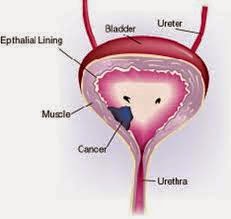
Bladder cancer is a type of cancer that begins in your bladder — a balloon-shaped organ in your pelvic area that stores urine. Bladder cancer begins most often in the cells that line the inside of the bladder. Bladder cancer typically affects older adults, though it can occur at any age.
The great majority of bladder cancers are diagnosed at an early stage — when bladder cancer is highly treatable. However, even early-stage bladder cancer is likely to recur. For this reason, bladder cancer survivors often undergo follow-up tests to look for bladder cancer recurrence for years after treatment.

Signs & Symptoms

  • Blood in urine
  • Pain and/or burning during urination (dysuria)
  • Frequency, urgency

These symptoms are non-specific and may be linked with other conditions that are unrelated to cancer. Urinary bladder cancer often causes no symptoms until it reaches an advanced stage. If you experience, any of these symptoms, you must see the doctor immediately. 


Staging:

  • Stage CIS: Flat cancer limited to the innermost lining of the bladder. It is high grade.
  • Stage T1: Cancer penetrated into the submucosal tissue.
  • Stage T2: Cancer penetrated the muscular bladder wall.
  • Stage T3: Cancer penetrated through muscular bladder wall into the surrounding fat.
  • Stage T4: Cancer penetrated into the adjacent structures (prostate, uterus, or vagina). Regional lymph nodes not involved yet.
  • Stage T1-4N1-2M1-2: Cancer spread out of abdomen/pelvic wall to lymph nodes or distant organs like liver, lungs, or bones.

Diagnosis

The mainstay of diagnosis is a cystoscopy and biopsy where a long tubular instrument is inserted into the urinary bladder and the entire bladder lining is inspected. If any tumour is seen, the urologist tries to resect as much tumour as possible. Any abnormal looking tissue is taken for biopsy and sent to the pathologist for examination under a microscope. The pathologist will confirm any cancer if present, and the depth of penetration into the wall of the urinary bladder. Some of the other tests that the patient may have to undergo for diagnosis and staging are: urine for cytology, ultrasound, CT/MRI scan, and sometimes PET-CT and bone scan, if indicated.

The purpose of doing these tests is to find out the stage of the cancer as the prognosis and treatment depends upon the stage. Broadly speaking, there are four stages depending upon how deep the cancer has penetrated into the bladder wall, and whether it has spread into other structures outside the bladder like lymph nodes, bone, liver etc.

There are three main modalities of treatment - surgery, radiotherapy, and chemotherapy, either alone or in combination. In very early bladder cancers limited to the superficial layer of the bladder wall, immunological therapy is used where the patient comes in for multiple sessions of a drug being instilled into the bladder.


Surgery is one of the most widely used treatments. In most of the locally advanced tumours, the surgery is called radical cystectomy where the entire bladder and some adjoining structures are also removed. This operation requires some form of urinary diversion for the urine to come out through a new pathway. In certain less advanced tumours, a partial cystectomy may be sufficient where only a part of the bladder will be removed.


Radiotherapy alone or in combination with chemotherapy is an alternative to surgery where the patient wants to conserve his bladder. Radiotherapy is the use of high energy X-rays which are focused on the area to be treated without affecting the tolerance of surrounding normal structures. Today, there are a number of sophisticated treatment techniques like IMRT, IGRT etc. To achieve this aim using state of art linear accelerators.

Chemotherapy is the use of medicines given intravenously and is called systemic treatment as it can kill cancer cells anywhere in the body.

Appropriate treatment in a good multidisciplinary hospital can result in curing more than 50 per cent of patients. If the cancer is diagnosed at an early stage, the results are much better.
For more information visit:          http://www.medworldindia.com        
                    
https://www.facebook.com/medworld.india

Please scan and email your medical reports  to us at care@medworldindia.com and we shall get you a Free Medical Opinion from India’s Best Doctors.

Call Us : +91-9811058159
Mail Us : care@medworldindia.com


Thursday, 13 March 2014

Bladder Cancer Symptoms and Treatment - Advanced Treatment for Bladder Cancer in India

Approximately 70 to 80 percent of patients newly diagnosed with bladder cancer have superficial, noninvasive bladder cancer. If the cancer spreads further into the muscle wall of the bladder or to nearby lymph nodes and organs, it is called invasive bladder cancer. Bladder cancer occurs more frequently among older men, with the median age of diagnosis being 58 and the media age of death being 65, based on data collected from 2010 to 214.

Smoking is the greatest risk factor for bladder cancer, according to the Centers for Disease Control and Prevention, causing approximately 20 to 30 percent of bladder cancers among women and 50 to 65 percent of bladder cancer among men.
It is characterized by urine that may appear dark yellow, bright red or cola colored, However hematouria can be intermittent, even when caused by serious disease, and its severity is not correlated to the severity of the underlying cancer. Other symptoms of bladder cancer may also include frequent urination, painful urination, urinary tract infection and lower back pain, according to the National Institutes of Health.

Diagnosis & Tests

Initial physically examination usually involves the doctor inserting gloved fingers into the vagina and/or rectum to feel for lumps and abnormal growth, according to the National Cancer Institute. This is usually followed with blood tests, urine tests and cystoscopy. Flexible cystoscopy uses a thin tube with a light at the end (called a cystoscope) to look inside the bladder. It is a low-risk procedure that is generally conducted in the physician's office under local anesthesia, However inflammations and bleeding can result in poor visualization and reduced accuracy. Hence additional tests are usually needed.
If invasive bladder cancer is suspected, the doctor may also order MRIs, CT scans and X-rays in order to determine if the cancer has spread to the kidneys, ureters and other internal organs.

Treatment of Bladder Cancer in India

Bladder Sparing Surgery

This involves using a combination of chemotherapy and radiotherapy to destroy the cancer cells locally and also if they have spread to other parts of the body. Transurethral resection of bladder tumour and partial removal of bladder are also types of bladder sparing surgeries which are used when the tumor is superficial or minimally invasive. These treatment techniques can be used in combination with each other.

Neobladder or Urine diversion techniques

Neobladder or Urine diversion techniques : This is required after radical cystectomy or complete removal of bladder in cases where the tumor has penetrated the bladder wall and spread beyond it

Radical Cystectomy :

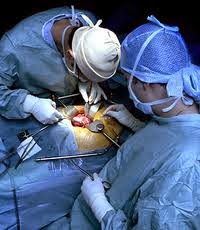
If the cancer is larger or is in more than one part of the bladder, a radical cystectomy or complete removal of the bladder is needed. This operation removes the entire bladder and nearby lymph nodes. In men, the prostate is also removed. In women, the ovaries, fallopian tubes (tubes that connect the ovaries and uterus), the uterus (womb) and a small portion of the vagina are often removed along with the bladder. These surgeries are typically done through a cut (incision) into the abdomen while the patient is placed under general anesthesia. The patient needs to stay in the hospital for about a week after the surgery. The patient can usually go back to his normal activities in 4 to 6 weeks.

Laparoscopic Radical Cystectomy :

In some cases, the surgeon may operate through several smaller incisions using special long, thin instruments, one of which has a tiny video camera on the end to see inside the pelvis. This is known as laparoscopic, or “keyhole” surgery. The surgeon may either hold the instruments directly or may sit at a control panel in the operating room and maneuver robotic arms to do the surgery. If it can be done, laparoscopic surgery may result in less pain and quicker recovery after the operation (due to the smaller incisions). But it has not been around as long as the standard type of surgery and it’s not yet clear if it is equally as effective. This technique is still in its infancy and is not practiced very commonly.


Medworld India offers comprehensive care for patients with Bladder Cancer  including advanced diagnosis, best treatment options . A team of Surgical Oncologists, Radiation Oncologists, Medical Oncologists, Urologists, Rehabilitation team and other medical specialties work together to treat each Bladder Cancer patient We consider each patient's type and extent of Bladder Cancer to recommend the most appropriate treatment plan. They also carefully consider and select the treatment option that will allow the patient to maintain quality of life with good survival rate.

Why should you choose to get Indian hospitals offer the Best Cancer Treatment in India at affordable prices. MedWorld india associated Best Cancer Treatment Hospitals in India have the latest technology and infrastructure to offer the Most Advanced Cancer Treatment at low cost.

At MedWorld India Affiliated Best Cancer Hospitals are to deliver highest quality and advanced oncology care in a supportive and compassionate environment to all our patients, and to advance the treatment and prevention of cancers through innovative research.

MedWorld India Affiliated Best Cancer Hospitals in India offer:

  • World class results for Cancer Treatment
  • World Class equipment for investigations, radiotherapy and surgery
  • Cancer specialists with great qualifications and experience
  • India has many super specialists ( specialization in one particular area: Breast Cancers, Stomach Cancers, Prostate Cancers, etc)
  • Low cost of cancer treatment
  • India offers the perfect combination of expertise and economical costs

For more information visit:          http://www.medworldindia.com        
                    
https://www.facebook.com/medworld.india

Please scan and email your medical reports  to us at care@medworldindia.com and we shall get you a Free Medical Opinion from India’s Best Doctors.

Call Us : +91-9811058159
Mail Us : care@medworldindia.com


Saturday, 15 February 2014

Bladder Cancer treatment in India - surgery, radiotherapy and chemotherapy

The urinary bladder is a hollow sac like organ situated in the pelvis. Its major function is to store the
urine produced by the kidneys before finally emptying it. Uncontrolled proliferation of normal cells lining the bladder wall can lead to cancer.


Though the exact cause of bladder cancer is unknown, there are certain well recognized risk factors. Smoking is one of the most important risk factors, and smokers have twice the risk of developing bladder cancer than non-smokers. People exposed to certain chemicals like aromatic amines. which are especially used in dyeing, rubber, leather and textile industries are also at increased risk if proper precautions are not taken. Chronic irritation of the bladder wall due to any cause can also lead to bladder cancer.

Symptoms

Some of the common symptoms of bladder cancer are haematuria and recurrent urinary tract infection. However, it is important to realize that most of the early cancers may be totally asymptomatic. A patient with these symptoms should consult his doctor if the symptoms persist for more than two weeks.


The mainstay of diagnosis is a cystoscopy and biopsy where a long tubular instrument is inserted into the urinary bladder and the entire bladder lining is inspected. If any tumour is seen, the urologist tries to resect as much tumour as possible. Any abnormal looking tissue is taken for biopsy and sent to the pathologist for examination under a microscope. The pathologist will confirm any cancer if present, and the depth of penetration into the wall of the urinary bladder. Some of the other tests that the patient may have to undergo for diagnosis and staging are: urine for cytology, ultrasound, CT/MRI scan, and sometimes PET-CT and bone scan, if indicated.

The purpose of doing these tests is to find out the stage of the cancer as the prognosis and treatment depends upon the stage. Broadly speaking, there are four stages depending upon how deep the cancer has penetrated into the bladder wall, and whether it has spread into other structures outside the bladder like lymph nodes, bone, liver etc.

Treatment

There are three main modalities of treatment of treatment - surgery, radiotherapy, and chemotherapy, either alone or in combination. In very early bladder cancers limited to the superficial layer of the bladder wall, immunological therapy is used where the patient comes in for multiple sessions of a drug being instilled into the bladder.


* Surgery is one of the most widely used treatments. In most of the locally advanced tumours, the surgery is called radical cystectomy where the entire bladder and some adjoining structures are also removed. This operation requires some form of urinary diversion for the urine to come out through a new pathway. In certain less advanced tumours, a partial cystectomy may be sufficient where only a part of the bladder will be removed.


* Radiotherapy alone or in combination with chemotherapy is an alternative to surgery where the patient wants to conserve his bladder. Radiotherapy is the use of high energy X-rays which are focused on the area to be treated without affecting the tolerance of surrounding normal structures. Today, there are a number of sophisticated treatment techniques like IMRT, IGRT etc. To achieve this aim using state of art linear accelerators.

* Chemotherapy is the use of medicines given intravenously and is called systemic treatment as it can kill cancer cells anywhere in the body.

Appropriate treatment in a good multidisciplinary hospital can result in curing more than 50 per cent of patients. If the cancer is diagnosed at an early stage, the results are much better.


 For more information visit:          http://www.medworldindia.com         
                    https://www.facebook.com/medworld.india

Please scan and email your medical reports  to us at care@medworldindia.com and we shall get you a Free Medical Opinion from India’s Best Doctors.

Call Us : +91-9811058159
Mail Us : care@medworldindia.com


Contact Form

Name

Email *

Message *