Showing posts with label Liver Cancer Surgery Benefits in India. Show all posts

Monday, 3 February 2014

Nonsurgical Treatments for Liver Cancer in India

Liver cancer or Hepatocellular carcinoma (HCC) is one of the commonest cancers in the world which have a high incidence of Hepatitis B infection. Apart from Hepatitis B, it may be caused by other diseases that lead to cirrhosis of the liver such as Hepatitis C infection, and alcohol abuse. 
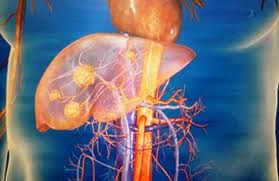
Unfortunately, like many other cancers, liver cancer may go undetected until a late stage. It is often brought to attention by an ultrasound or CT scan done for pain in the upper abdomen or another unrelated symptom. Liver cancers are malignant tumors that grow on the surface or inside the liver. 
Typers of liver cancer are 

HepatocellularCarcinoma  , Cholangiocarcinoma , Hepatoblastoma and Angiosarcoma or Hemangiosarcoma

Liver cancer is usually diagnosed with a number of different tests, which may include:
§  Blood tests: To check your general health and check for a chemical usually found inincreased levels in people with primary liver cancer.
§  Ultrasound: A picture of the liver is taken using sound waves.
§  Computed Tomography (CT) Scan: A specialised x-ray taken from many different angles to build a three-dimensional (3-D) picture of the body.
§  Magnetic Resonance Imaging (MRI): Similar to a CT scan, but uses a powerful magnet and magnetic field instead of x-rays to build an image of the body.
§  Liver Biopsy: A small piece of liver tissue is removed with a needle and examined for cancer cells.
§  Laparoscopy: A small cut in the lower abdomen is made and this allows a thinmini-telescope (laparoscope) to be inserted to look at the liver and take a sample of liver tissue.
§  Needle Biopsy: Needle biopsy, also called image-guided biopsy, is usually performed using a (MR) to guide the procedure. In many cases, needle biopsies are performed with the aid of equipment that creates a computer-generated image and allows radiologists to see an area inside the body from various angles. This “stereotactic” equipment helps them pinpoint the exact location of the abnormal tissue.
§  Large Core Needle Biopsy: In this technique, a special needle is used that enables the radiologist to obtain a larger biopsy sample. This technique is often used to obtain tissue samples from lumps or other abnormalities in the breast that are detected by physical examination or on mammograms or other imaging scans. moving X-ray technique (fluoroscopy) computed tomography (CT), ultrasound or magnetic resonance.


Liver Cancer Treatment in India
§  Surgery: Procedure to remove a portion of the liver. Your doctor may recommend partial hepatectomy to remove the liver cancer and a small portion of healthy tissue that surrounds it if your tumor is small and your liver function is good.
§  Transplant Surgery: During liver transplant surgery, your diseased liver is removed and replaced with a healthy liver from a donor. Liver transplant surgery may be an option for people with early-stage liver cancer who also have cirrhosis.
§  Freezing Cancer Cells: Cryoablation uses extreme cold to destroy cancer cells. During the procedure, your doctor places the instrument (cryoprobe) containing liquid nitrogen directly onto liver tumor.
§  Heating Cancer Cells: In a procedure called radiofrequency ablation, electric current is used to heat and destroy cancer cells. It is also called hyperthermia cancer treatment.
§  Injecting Alcohol: During alcohol injection, pure alcohol is injected directly into tumors, either through the skin or during an operation. Alcohol dries out the cells of the tumor and eventually the cells die.
§  Chemoembolization: A type of chemotherapy treatment that supplies strong anti-cancer drugs directly to the liver. It is palliative and not curative treatment.
§  Radiation Therapy: This treatment uses high-powered energy beams to destroy cancer cells and shrink tumors.
§  Targeted Drug Therapy: Drugs designed to interfere with a tumor’s ability to generate new blood vessels.

Nonsurgical Treatments for Liver Cancer at World Class Hospitals in India
1) Chemoembolization: Chemoembolization is a minimally invasive treatment for liver cancer that can be used when there is too much tumor to treat with radiofrequency ablation (RFA), when the tumor is in a location that cannot be treated with RFA, or in combination with RFA or other treatments. In this the anticancer drug is given along with another substance that blocks the hepatic artery. (artery supplying the liver). Thus the anticancer drug is gets concentrated in the cancerous portion of the liver.2) Radiofrequency Ablation: For inoperable liver tumors, radiofrequency ablation (RFA) offers a nonsurgical, localized treatment that kills the tumor cells with heat, while sparing the healthy liver tissue. Thus, this treatment is much easier on the patient than systemic therapy.
3) Cryosurgery: It is a treatment that uses an instrument to freeze and destroy abnormal tissue, such as cancerous cells. This type of treatment is also called Cryotherapy. The doctor may use ultrasound to guide the instrument.
4) Drugs called radio-sensitizers may be given with the radiation therapy to make the cancer cells more sensitive to radiation therapy.
5) Percutaneous Ethanol Injection: Percutaneous ethanol injection is a cancer treatment in which a small needle is used to inject ethanol (alcohol) directly into a tumor to kill cancer cells. The procedure may be done once or twice a week. Usually local anesthesia is used, but if the patient has many tumors in the liver, general anesthesia may be needed.
6) Hyperthermia Therapy: Hyperthermia therapy is a type of treatment in which body tissue is exposed to high temperatures to damage and kill cancer cells or to make cancer cells more sensitive to the effects of radiation and certain anticancer drugs. Because some cancer cells are more sensitive to heat than normal cells are, the cancer cells die and the tumor shrinks.
7) Biologic Therapy: Biologic therapy is a treatment that uses the patient’s immune system to fight cancer. Substances made by the body or made in a laboratory are used to boost, direct, or restore the body’s natural defenses against cancer. This type of cancer treatment is also called biotherapy or immunotherapy.
For more information visit:          http://www.medworldindia.com        
                    
https://www.facebook.com/medworld.india

Please scan and email your medical reports  to us at care@medworldindia.com and we shall get you a Free Medical Opinion from India’s Best Doctors.

Call Us : +91-9811058159
Mail Us : care@medworldindia.com


Tuesday, 7 January 2014

Do we know what causes liver cancer ? Can liver cancer be prevented .

Although several risk factors for hepatocellular cancer are known , exactly how these may lead normal liver cells to become cancerous is only partially understood.
Cancers develop when the DNA of cells is damaged. DNA is the chemical in each of our cells that makes up our genes – the instructions for how our cells function. We usually look like our parents because they are the source of our DNA. But DNA affects more than how we look. Some genes have instructions for controlling when cells grow, divide into new cells, and die. Genes that help cells grow and divide are called oncogenes. Genes that slow down cell division or cause cells to die at the right time are called tumor suppressor genes. Cancers can be caused by DNA changes that turn on oncogenes or turn off tumor suppressor genes. Several different genes usually need to have changes for a cell to become cancerous.

Certain chemicals that cause liver cancer, such as aflatoxins, are known to damage the DNA in liver cells. For example, studies have shown that aflatoxins can damage the TP53 tumor suppressor gene, which normally works to prevent cells from growing too much. Damage to the TP53 gene can lead to increased growth of abnormal cells and formation of cancers. Infection of liver cells with hepatitis viruses can also damage DNA. These viruses have their own DNA, which carries instructions on how to infect cells and produce more viruses. In some patients, this viral DNA can insert itself into a liver cell's DNA, where it may affect the cell's genes. But scientists still don't know exactly how this might lead to cancer.

Although scientists are starting to understand how liver cancer develops, much more must be learned. Liver cancer clearly has many different causes, and there are undoubtedly many different genes involved in its development. It is hoped that a more complete understanding of how liver cancers develop will help doctors find ways to better prevent and treat them.

Liver cancersymptoms

Like many types of cancer, liver cancer symptoms often do not appear in the early stages. As a result, liver cancer tends to be diagnosed at a more advanced stage.
Because there are no widely recommended routine screening tests for liver cancer, people with a family history of the disease or other risk factors should talk with their doctor about steps they can take to monitor or reduce their risk.


The symptoms of liver cancer may be different for each person and any one of these symptoms may be caused by other, benign conditions.
When present, common liver cancer symptoms may include:
  • Weight loss not associated with changes in diet.
  • Decrease in appetite or a feeling of fullness after a small meal.
  • Nausea and vomiting not associated with other known conditions.
  • General weakness and/or fatigue that is persistent, ongoing weakness or fatigue.
  • Fever that is unrelated to other conditions.
  • Pain occurring in the upper abdomen on the right side or near the right shoulder blade.
  • Enlarged liver (hepatomegaly) felt as a mass under the ribs on the right side.
  • Enlarged spleen felt as a mass under the ribs on the left side.
  • Abdominal swelling (ascites) or bloating in the abdomen can occur as a mass forms.
  • Jaundice, which appears as yellowing of the skin and eyes. Jaundice occurs when the liver is not functioning properly.
Many of the above mentioned symptoms are similar to other types of benign liver infections or diseases. In the case of liver cancer, the symptoms will continue to evolve and worsen as the disease advances. It is important to see a doctor for an accurate diagnosis if you have any of the above signs of liver cancer.
In rare cases, other disorders may develop as a result of liver cancer, especially in the early stages of the disease. Paraneoplastic syndromes cause symptoms in other parts of the body. Awareness of these symptoms may help with diagnosing liver cancer.
Some paraneoplastic syndromes related to liver cancer include:
  • Hypercalcemia: High blood calcium levels
  • Hypoglycemia: Low blood sugar levels
  • Erythrocytosis: High red blood cell count
  • Hypercholesterolemia: High cholesterol levels
  • Gynecomastia: Breast enlargement
  • Shrinking of testicles in men
For more information visit:          http://www.medworldindia.com       
                    
https://www.facebook.com/medworld.india

Please scan and email your medical reports  to us at care@medworldindia.com and we shall get you a Free Medical Opinion from India’s Best Doctors.

Call Us : +91-9811058159
Mail Us : care@medworldindia.com


Saturday, 21 December 2013

Nonsurgical Treatment for Liver Cancer: Extend Life and Improve Quality

Liver cancer or Hepatocellular carcinoma (HCC) is one of the commonest cancers in the world which have a high incidence of Hepatitis B infection. Apart from Hepatitis B, it may be caused by other diseases that lead to cirrhosis of the liver such as Hepatitis C infection, and alcohol abuse. 
Unfortunately, like many other cancers, liver cancer may go undetected until a late stage. It is often brought to attention by an ultrasound or CT scan done for pain in the upper abdomen or another unrelated symptom. Liver cancers are malignant tumors that grow on the surface or inside the liver. Typers of liver cancer are Hepatocellular Carcinoma , Cholangiocarcinoma  ,Hepatoblastoma .

Surgical removal of liver tumors offers the best chance for a cure. Unfortunately, liver tumors are often inoperable because the tumor may be too large, or has grown into major blood vessels or other vital structures. Sometimes, many small tumors are spread throughout the liver, making surgery too risky or impractical. Surgical removal is not possible for more than two-thirds of primary liver cancer patients and 90 percent of patients with secondary liver cancer.


There are a number of tests that can help in the diagnosis of cancer, including blood tests, physical examination and a variety of imaging techniques including X-rays (e.g., chest X-rays and mammograms); computed tomography (CT); magnetic resonance (MR) and ultrasound. Usually, however, the final diagnosis cannot be made until a biopsy is performed. In a biopsy, a sample of tissue from the tumor or other abnormality is obtained and examined by a pathologist. By examining the biopsy sample, pathologists and other experts also can determine what kind of cancer is present and whether it is likely to be fast or slow growing. This information is important in deciding the best type of treatment.
Although there are no standard or routine screening tests for liver cancer, the following tests are being used or studied to screen for it
  • Physical examination : Physical examination may show an enlarged, tender liver. Also, your skin and eyes may be checked for signs of jaundice.
  • Blood tests :Physical examination may show an enlarged, tender liver. Also, your skin and eyes may be checked for signs of jaundice.
  • Imaging Studies like Abdominal CT scan and Abdominal Ultrasound test
  • Liver biopsy or Aspiration.
  • Liver enzymes (liver function tests)
In order to check if the Liver Cancer has spread elsewhere in the body, the following tests are to be done:
  • PET Scan
  • Bone Scan- to check if the cancer has spread to the bones.


Tumors need a blood supply, which they actively generate, to feed themselves and grow. As vascular experts, interventional radiologists are uniquely skilled in using the vascular system to deliver targeted treatments via catheter throughout the body. In treating cancer patients, interventional radiologists can attack the cancer tumor from inside the body without medicating or affecting other parts of the body by using embolization and radiofrequency heat.

Embolization is a well-established interventional radiology technique that is used to treat trauma victims with massive bleeding, to control hemorrhage after childbirth, to decrease blood loss prior to surgery and to treat tumors. In treating cancer patients, interventional radiologists use embolization to cut off the blood supply to the tumor (embolization), deliver radiation to a tumor (radioembolization), or combine this technique with chemotherapy to deliver the cancer drug directly to the tumor (chemoembolization)

Chemoembolization is a minimally invasive treatment for liver cancer that can be used when there is too much tumor to treat with radiofrequency ablation (RFA), when the tumor is in a location that cannot be treated with RFA, or in combination with RFA or other treatments.
Chemoembolization delivers a high dose of cancer-killing drug (chemotherapy) directly to the organ while depriving the tumor of its blood supply by blocking, or embolizing, the arteries feeding the tumor. Using imaging for guidance, the interventional radiologist threads a tiny catheter up the femoral artery in the groin into the blood vessels supplying the liver tumor. The embolic agents keep the chemotherapy drug in the tumor by blocking the flow to other areas of the body. This allows for a higher dose of chemotherapy drug to be used, because less of the drug is able to circulate to the healthy cells in the body. Chemoembolization usually involves a hospital stay of two to four days. Patients typically have lower than normal energy levels for about a month afterwards.

Radiofrequency Ablation


For inoperable liver tumors, radiofrequency ablation (RFA) offers a nonsurgical, localized treatment that kills the tumor cells with heat, while sparing the healthy liver tissue. Thus, this treatment is much easier on the patient than systemic therapy. Radiofrequency energy can be given without affecting the patient's overall health and most people can resume their usual activities in a few days.
In this procedure, the interventional radiologist guides a small needle through the skin into the tumor. From the tip of the needle, radiofrequency energy (similar to microwaves) is transmitted to the tip of the needle, where it produces heat in the tissues. The dead tumor tissue shrinks and slowly forms a scar. The FDA has approved RFA for the treatment of liver tumors.


Targeted therapy is a treatment that targets the cancer’s specific genes, proteins, or the tissue environment that contributes to cancer growth and survival. This type of treatment blocks the growth and spread of cancer cells while limiting damage to normal cells. Recent studies show that not all tumors have the same targets. To find the most effective treatment, your doctor may run tests to identify the genes, proteins, and other factors in your tumor.

Benefits of Nonsurgical Treatment for Liver Cancer

  • Is most effective when all the cancer is localized in the liver
  • Can be used to treat primary liver cancer and tumors that have metastasized (spread) from other areas in the body to the liver
  • Usually does not require general anesthesia
  • Is well tolerated-most patients can resume their normal routine the next day and may feel tired for a few days
  • Can be repeated if necessary
  • May be combined with other treatment options
  • Can relieve pain and suffering for many cancer patients

For more information visit:          http://www.medworldindia.com       
                                                          
https://www.facebook.com/medworld.india

Please scan and email your medical reports  to us at care@medworldindia.com and we shall get you a Free Medical Opinion from India’s Best Doctors.

Call Us : +91-9811058159
Mail Us : care@medworldindia.com


Friday, 20 December 2013

Fight to End Cancer – World class results for Cancer Treatment in India

  • Stop smoking (active and passive) and alcohol to prevent lung, head and neck cancers.
  • Avoid high fat and rich foods; eat whole grains, fruits and fresh vegetables to prevent cancer of breast, prostate and colon.
  • Exercise to stay healthy
  • Avoid exposure to – household solvent cleaners, cleaning fluids, and paint thinners, pesticides, fungicides and other chemicals to avoid lung cancer.
  • Avoid multiple sex partners to avoid cancer cervix.
  • Avoid direct sunlight in summers to avoid skin cancers.
  • Get screening tests like the Pap smears, mammograms, Prostate Specific Antigen (PSA) and Digital Rectal Examinations (Dress) for secondary prevention.
  • Each and every individual should do self examination once a month.
  • Each and every individual visiting his / her doctor for any ailment should be screened for cancer.
  • Annual cancer check up should be done at cancer hospitals.
  • Suspected cancer cases should be investigated urgently to confirm or rule out cancer.
Steps before Starting the Treatment
  • Tissue diagnosis to confirm / rule out cancer by FNAC / Biopsy.
  • Staging work up to confirm stage of the disease.
  • Tumour Board Evaluation to chart out custom made treatment plan for each individual, as per standard treatment guidelines.
  • Choosing NABH Accredited cancer hospitals, offering quality cancer treatment.
  • A panel of cancer experts i.e. Medical Oncologists, Radiation Oncologists, Surgical Oncologists, Gynae Oncologists, Paediatric Oncologists, Onco-pathologists, Radiologists and Imaging experts, get together to review and plan suitable modality or modalities of treatment.
  • Treatment is need driven and not doctor driven.
  • Patients get the choice of surgery or radiotherapy, if the results are same by both modalities.
  • Patients are saved from unnecessary surgeries, if the surgeries cannot be performed.
  • Patients get complete treatment. This prevents recurrence due to incomplete treatment.
  • Chances of cure / improvement in quality of life are much higher because of right and optimum treatment.
  • Patients are saved from Medical shopping and get expert opinion under one roof by spending one consultation fee only.


Radiation
Cancer is treated by giving external radiation with linear accelerators and internal radiation i.e. brachytherapy. The newer techniques of Intensity Modulated Radiation Therapy ensures that healthy tissues surrounding the tumour are not exposed to radiation to prevent side effects of radiotherapy. Radiation oncologists and physicists work together as a team to give radiation.
Cancer Surgeries are very complex lasting 2 – 12 hours. A dedicated team of surgical oncologists and Anaesthesiologists, supported by other allied specialists is a must. Surgical oncologists are best suited to decide whether surgeries have to be conservative or radical.
Chemotherapies
Medical oncologists are trained exclusively to plan and manage chemotherapies and their side effects. Chemotherapies can be Normal and High Dose, including dose–intense and dose–dense; Infusional multiple and single drug; Bolus Chemotherapies; Intra-arterial chemotherapy; Targeted Therapies; Immunotherapy / Biological Therapies; Hormonal Therapies; Neutropenic Care; Nutritional Therapy; Palliative and Terminal Supportive Care; blood transfusion and I/V fluids etc. The radiotherapists and surgeons are not trained to perform chemotherapies.

Medworld India offers comprehensive care for patients with Cancer, including advanced diagnosis, best treatment options . A team of Surgical Oncologists, Radiation Oncologists, Medical Oncologists, Urologists, Rehabilitation team and other medical specialties work together to treat each Cancer patient We consider each patient's type and extent of Cancer to recommend the most appropriate treatment plan. They also carefully consider and select the treatment option that will allow the patient to maintain quality of life with good survival rate.

Why should you choose to get Indian hospitals offer the Best Cancer Treatment in India at affordable prices. MedWorld india associated Best Cancer Treatment Hospitals in India have the latest technology and infrastructure to offer the Most Advanced Cancer Treatment at low cost.

At MedWorld India Affiliated Best Cancer Hospitals are to deliver highest quality and advanced oncology care in a supportive and compassionate environment to all our patients, and to advance the treatment and prevention of cancers through innovative research.

MedWorld India Affiliated Best Cancer Hospitals in India offer:

  1.  World class results for Cancer Treatment
  2.  World Class equipment for investigations, radiotherapy and surgery
  3.  Cancer specialists with great qualifications and experience
  4.  India has many super specialists (specialization in one particular area: Breast      Cancers, Stomach Cancers, Prostate Cancers, etc)
  5.  Low cost of cancer treatment
  6.  India offers the perfect combination of expertise and economical costs

  For more information visit:          http://www.medworldindia.com      
                                                          
https://www.facebook.com/medworld.india

 Please scan and email your medical reports  to us at care@medworldindia.com and we shall get you a Free Medical Opinion from India’s Best Doctors.

  Call Us : +91-9811058159
  Mail Us : care@medworldindia.com


Contact Form

Name

Email *

Message *